
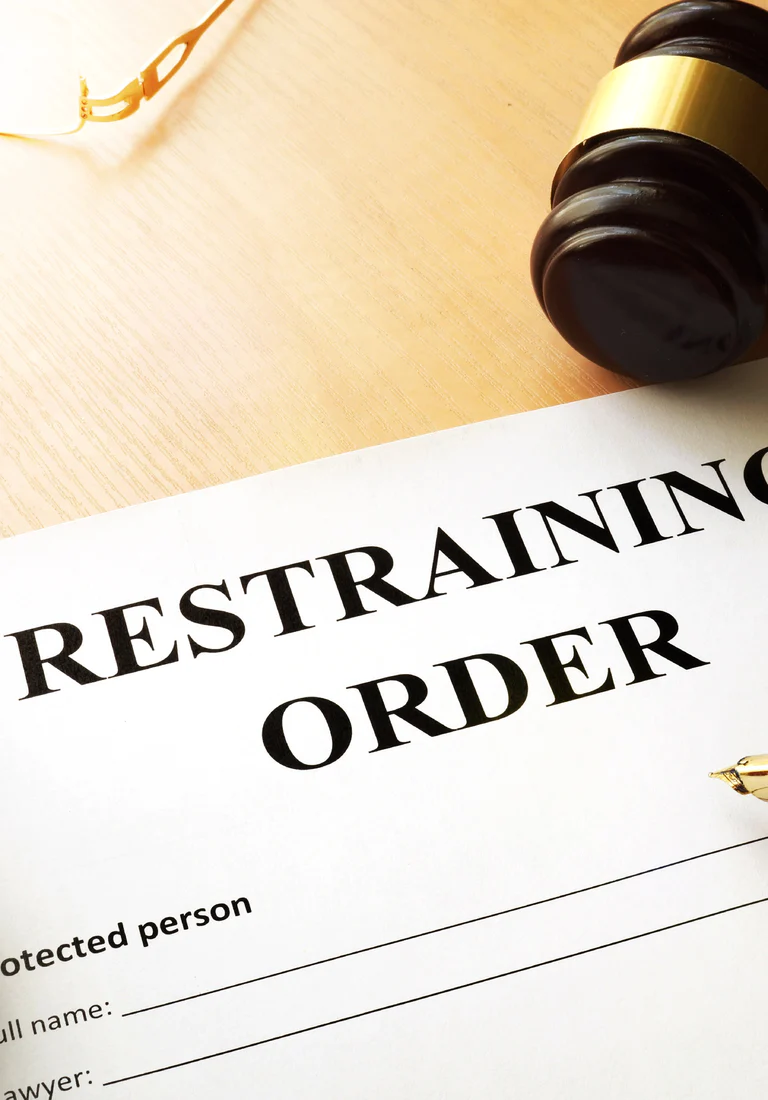
In Kansas, protective orders are specific court orders created by statute for abuse, stalking, domestic violence, sexual assault, or human trafficking. In contrast, restraining orders are a broader civil court tool used to stop certain conduct in many kinds of cases temporarily.
People often use the terms as if they mean the same thing, but Kansas law treats them differently. If you live in Kansas, this question matters because the kind of order filed can change the court process, the proof required, the relief available, and the penalty for violating it.
Protective Orders
Kansas uses protective orders for situations involving safety and personal harm. These cases have their own filing rules, hearings, and available remedies. Kansas courts recognize two main categories:
- Protection from abuse: Applies to abuse or threats within certain domestic or household relationships under K.S.A. 60-3107. A judge can order no contact, bar entry into a home, and in some cases, address custody, housing, or other safety-related issues.
- Protection from stalking, sexual assault, or human trafficking: Covers conduct outside the narrower abuse definition and can still lead to strong court protection under K.S.A. 60-31a01.
Restraining Orders
Kansas restraining orders are a broad civil court tool that can apply to many types of disputes, not just domestic violence or stalking cases. They are typically used to preserve the status quo until the court can hold a fuller hearing.
A court may issue a restraining order to stop a person from taking certain action right away. Or, the order can apply to family, property, business, or other civil disputes, depending on the case. For example, a restraining order might be used in a business dispute to prevent a partner from transferring company assets while litigation is pending, or in a divorce case to stop either party from selling shared property before the court divides it.
Why the Difference Matters in Real Life
Whether a court issues a protective order or a restraining order affects more than the paperwork. Protective orders in Kansas come with detailed statutory remedies and can carry criminal consequences if violated. Key distinctions include:
- Duration: Some final protective orders can stay in place for one year or longer under K.S.A. 60-3107, depending on the case type and extension rules.
- Criminal consequences: Under K.S.A. 21-5924, violating certain no-contact or stay-away terms can result in criminal charges.
- Scope of relief: Protective orders address personal safety, while restraining orders typically control conduct during a civil dispute without the same long-term protections.
Our Criminal Defense Attorneys Can Tell You More
Confusion is common because many people use “restraining orders” and “protective orders” as catch-all terms. In Kansas, though, the safer question is whether the case involves a statutory protective order or a general civil restraining order.
If you are in Johnson County or the surrounding Kansas area, at Henderson Legal Defense, we handle cases involving allegations, defense strategy, and court orders tied to domestic violence and related accusations.
You can learn more about our skilled defense team by contacting us online or calling (913) 359-3789 for a free consultation.